

Collagen fibril -material development for tissue engineering-
章节大纲
-
-
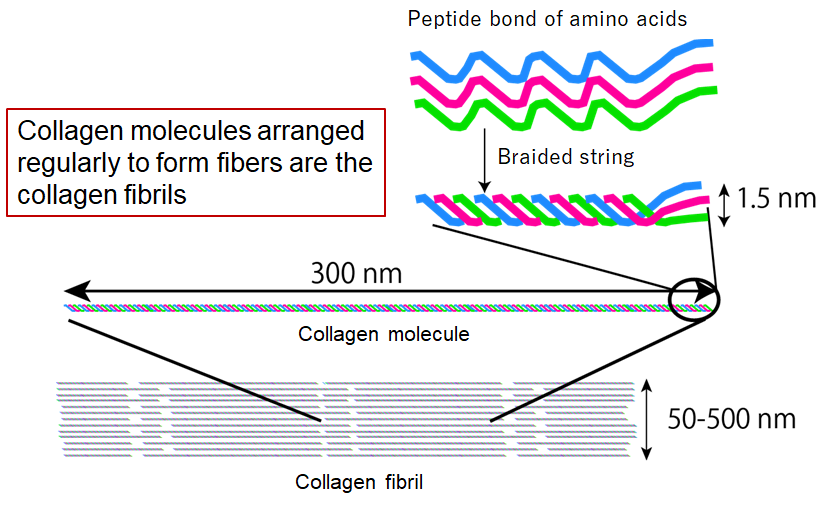
The collagen molecule is a type of protein. It is made up of three spiral peptide-bond chains of amino acids and is a string with a diameter of 1.5 nm and a length of 300 nm.
-
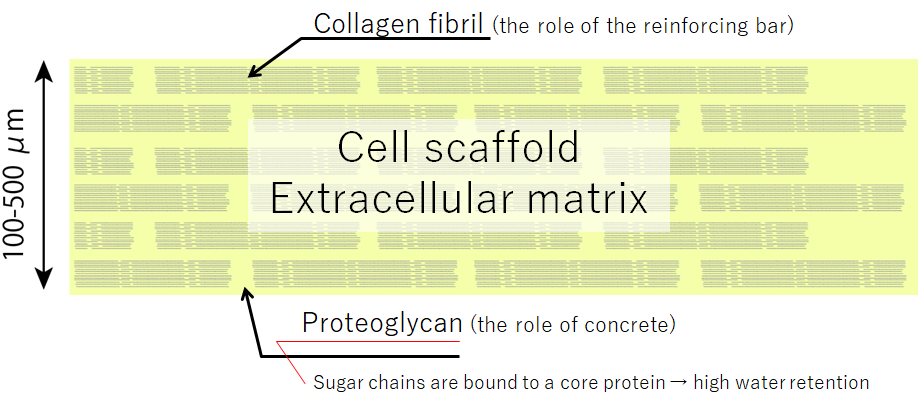
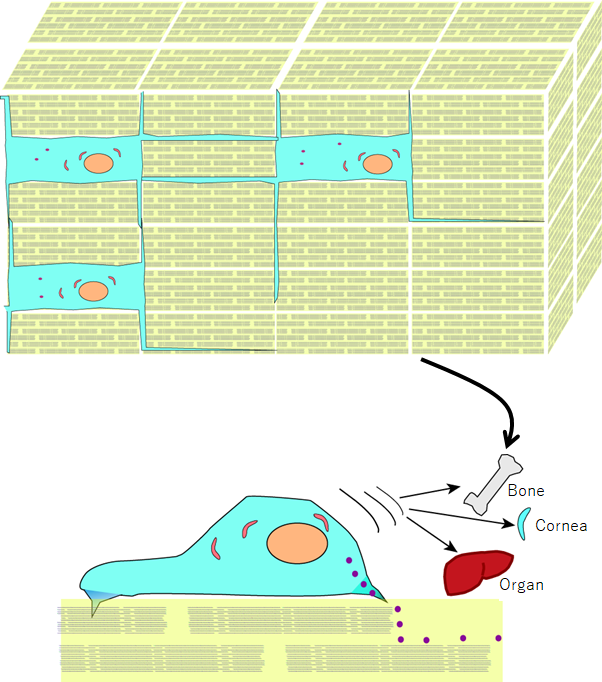
A thick fibrous bundle of collagen fibrils is called a collagen fiber bundle. Collagen fibrils and fiber bundles are distributed among various tissues and organs in our body, supporting the body three-dimensionally. Thus, they play the role of a reinforcing bar in a reinforced concrete building. The space between the collagen fibrils and fiber bundles is filled with proteoglycans, which act as concrete in a reinforced concrete building. A proteoglycan contains a large number of sugar chains bound to the core protein and has high water retention. The complex of collagen and proteoglycan, called the extracellular matrix, plays an important role in life support by acting as a cell scaffold and storing signal transmitters for cells to regulate their activity.
-
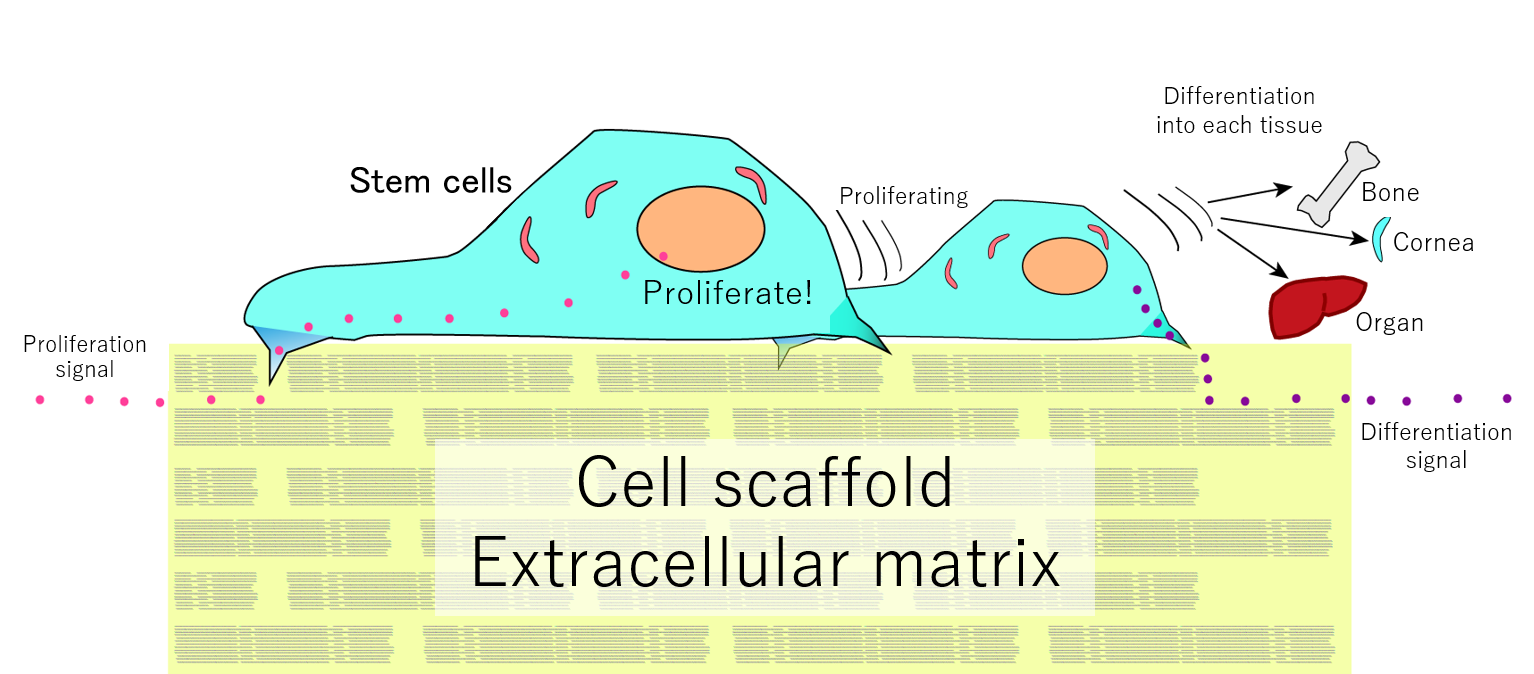
An artificial scaffold (such as collagen) is necessary for creating artificial tissues with cultured cells in biotechnology. Upon binding to a scaffold, cells acquire various information from the scaffold to proliferate or differentiate into each tissue. With an appropriate scaffold, the proliferation or differentiation of cells can be induced as intended.
-
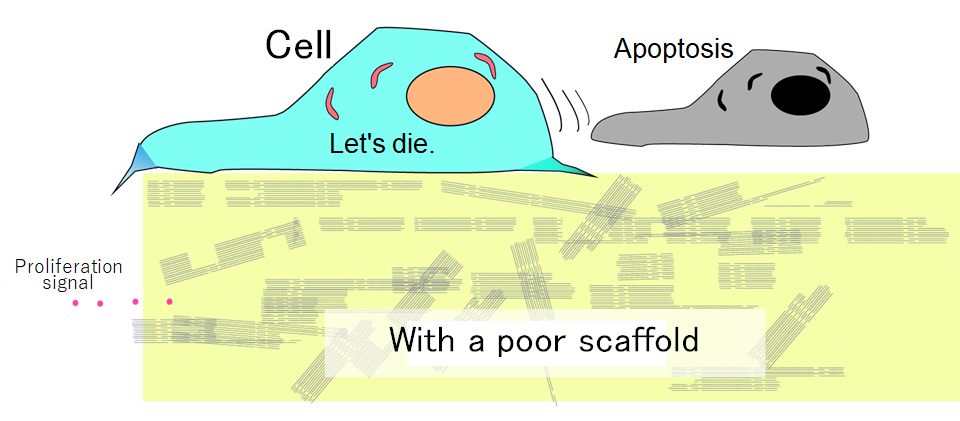
On the other hand, cells with a poor scaffold die by themselves (apoptosis). An appropriate scaffold depends on the type of tissues to be created. As the extracellular matrix structure found in the tissues of our body differs from tissue to tissue, a custom-made scaffold is needed for each type of tissue to be created.
-
Because the tissues of living organisms have a three-dimensional structure, they do not form with a flat scaffold. A custom-made scaffold with a three-dimensional structure is needed for each tissue, which requires a suitable scaffold material.
-