

Growth is regulated by hormones
セクションアウトライン
-
-
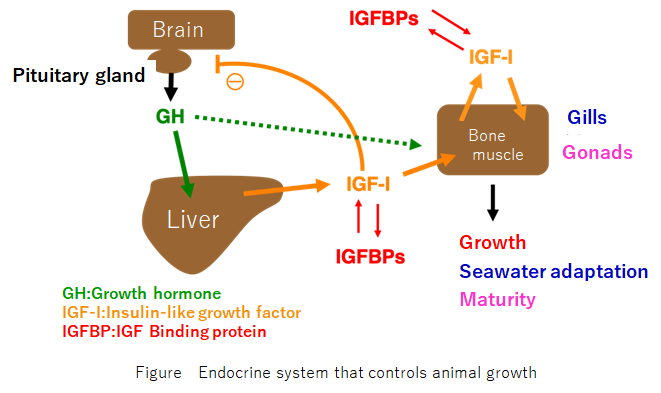
The growth of vertebrates, including fish, is primarily regulated by growth hormone (GH) and insulin-like growth factor (IGF)-I. GH is secreted from the pituitary gland either directly or indirectly through IGF-I in target organs such as the bones and muscles. IGF-I is secreted into the blood mainly through the stimulation of GH. Blood IGF-I not only mediates the action of GH but also inhibits the synthesis and secretion of GH in the pituitary gland. This is called negative feedback. The GH – IGF-I endocrine system remains autonomous in this way. IGF-I not only promotes cell proliferation but also helps improve adaptation to seawater when acting in the gills. It also contributes to the development of the gonads. Why does IGF-I, which has such a diverse range of effects, act on the appropriate organ at the appropriate time? Several IGF-binding proteins (IGFBPs) play an important role in this aspect.
-