

EPA and DHA amounts included in natural Thunnus orientalis larvae (fatty acid composition)
單元大綱
-
-
The fish oil analysis team routinely analyzes over 500 samples of fatty acids every year. Recently, we have succeeded in analyzing trace amounts of fatty acids contained in one larva. By the method of gas chromatography, we were able to analyze fatty acids in the muscle of larvae with a length of around 3 mm. This new method will be a powerful tool for investigating the growth and survival of wild larvae in the future.
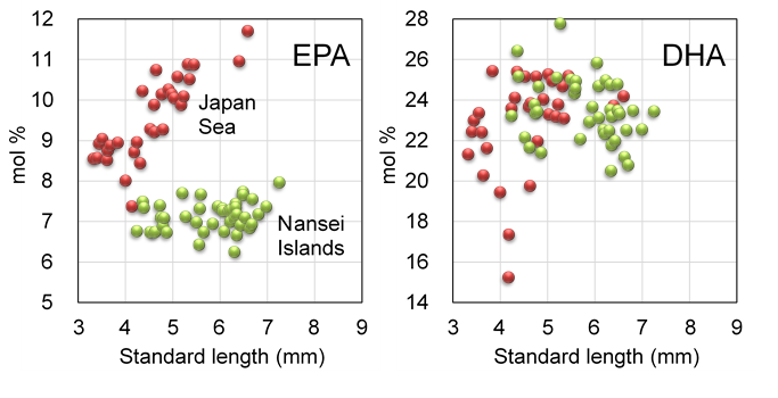
Figure: Plots of EPA and DHA proportions (mol% of total fatty acids) vs. standard lengths of Thunnus orientalis larvae.
The fatty acid analysis revealed that the EPA content differed according to the sampling area (the Nansei Islands with high water temperature vs. Sea of Japan with low water temperature).
-