單元大綱

  • ・Shipboard observations found that the marine ecosystem is changing in the northern Bering Sea in 2018.

    ・Clarify the process by which large zooplankton decrease due to early sea ice melting.

    ・Significant contributions to our understanding of the effects of climate change on marine ecosystems.

    •  A research group led by Assistant Professor MATSUNO Kohei and Associate Professor YAMAGUCHI Atsushi of the Graduate School of Fisheries Sciences, Hokkaido University has revealed that the proportion of large zooplankton in the northern Bering Sea decreases and the feeding environment for higher predators deteriorates when the sea ice melts early in the season.

       The northern Bering Sea, a continental shelf, is rich in plankton and is one of the world's best fishing grounds for snow crab, king crab, and cod. This sea is usually covered with sea ice from December to April. However, in the spring of 2018, the sea ice melted about one month earlier than usual, which is known to have adversely affected various marine organisms. In particular, decreased populations and worsened nutritional status of higher predators such as fish, seabirds, and pinnipeds were reported, but the cause of the adverse effects of early sea ice melt was still a matter of speculation. The research group conducted oceanographic surveys in the northern Bering Sea in 2017, when sea ice melted as usual, and in 2018, when sea ice melted earlier, and found that early melting of sea ice reduced the amount of large zooplankton useful as food for fish, which in turn reduced the energy received by higher-order predators. 

       The results of this research clarify one aspect of the process by which climate change modifies marine ecosystems, and will provide valuable knowledge that will greatly contribute to improving the accuracy of future predictions of the changing marine ecosystems.

       The results of this research were published in Frontier in Marine Science on Tuesday, February 22, 2022.


    • Fig. 1

      Fig. 2

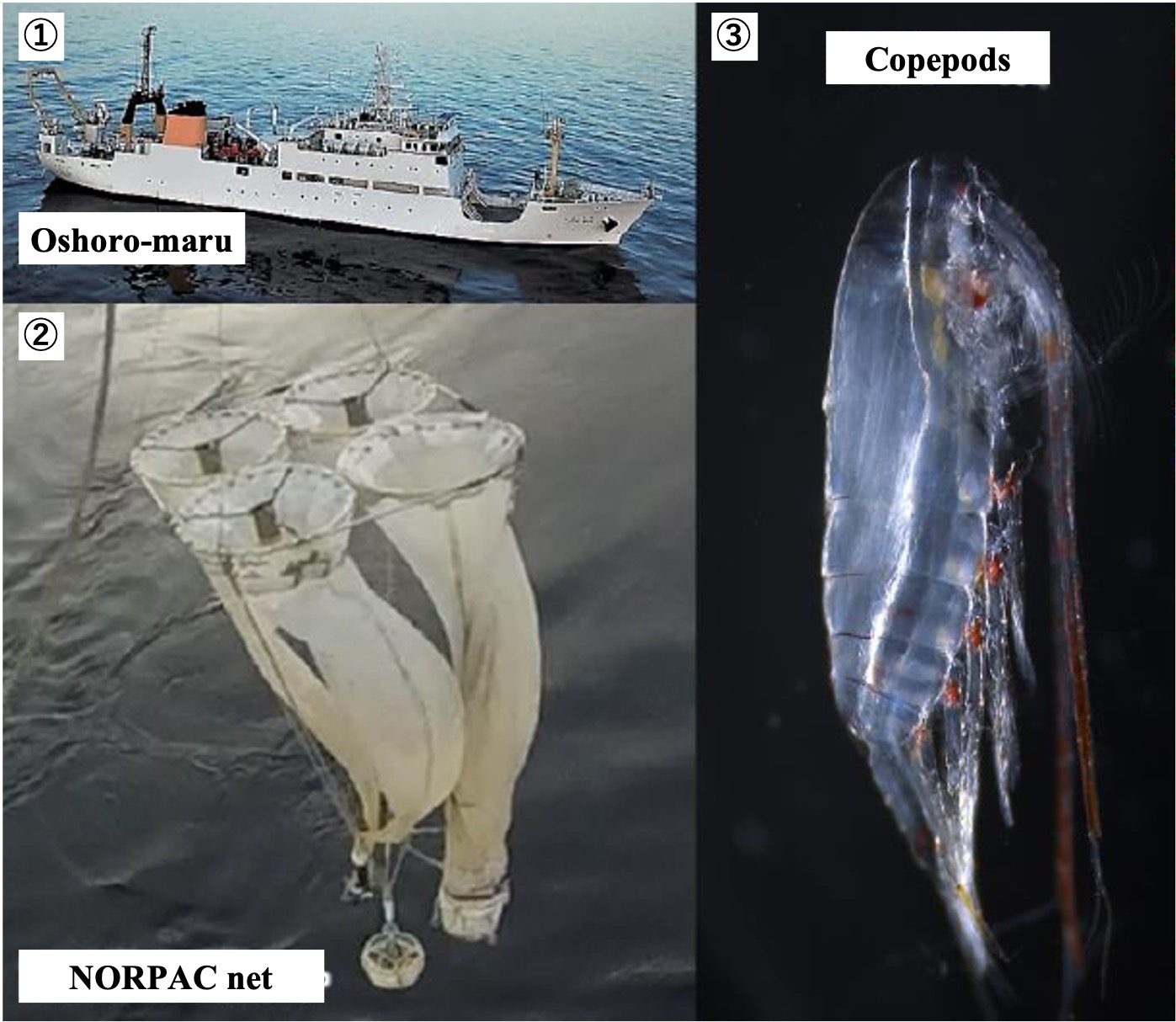
      ①:The Oshoro-Maru, a training ship attached to the Faculty of Fisheries Sciences of Hokkaido University, conducted research in the northern Bering Sea. 

      ②:Four sets of NORPAC nets used for zooplankton sampling.

      ③:The zooplankton copepods that were the most dominant in this study.

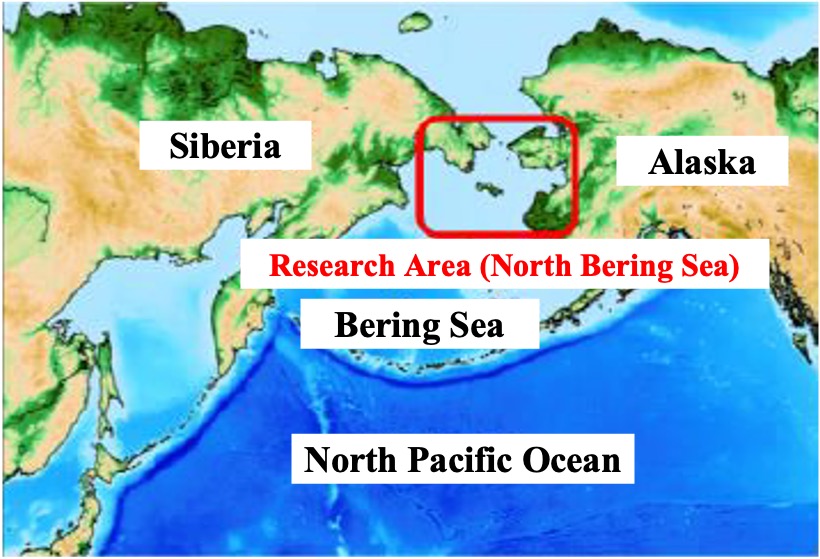
      ④:Map of the northern Bering Sea and surrounding area, the study area. 

    •  In recent years, sea ice has been rapidly decreasing in the polar regions due to global warming. In the northern Bering Sea, which is a seasonal sea ice area, a remarkable sea ice decline was observed in 2018, with sea ice melting about one month earlier than usual. As a result, various changes have been observed in the marine ecosystem. For example, a delay in phytoplankton blooms*1 , a northward shift in the distribution range of fish, a decrease in seabird populations, and a deterioration in the nutritional status of seals are known. Since the adverse effects observed in each organism could not be explained by the increase in water temperature alone, it was speculated that the deterioration of the feeding environment was the cause, but the details remained unclear. 

       Zooplankton is the most important food for higher-order predators in the ocean. Zooplankton feed on phytoplankton and are themselves eaten by fish and other predators, thereby transferring energy from lower-order organisms to higher-order predators. Among zooplankton, the research group paid particular attention to copepods, which are dominant in terms of biomass. By studying the abundance and composition of copepods, they attempted to elucidate the processes that affect marine ecosystems, starting with changes in the timing of sea ice melting. 

    • 【Glossary】 

      *1  bloom  …  A large proliferation of photosynthetic phytoplankton. 

    •  In order to observe the effects of earlier sea ice melting on zooplankton, field observations were conducted in the northern Bering Sea, located in the Arctic region, by the training ship Oshoro-Maru (see figure ①) in 2017 when sea ice melting was as usual and in the summer of 2018 when sea ice melting was earlier, respectively. Zooplankton samples were collected using a NORPAC net (see figure ②), fixed in formalin immediately after collection, and brought back to the laboratory. In the land-based laboratory, zooplankton were counted by taxon and species under a stereomicroscope. The dominant copepods (see figure ③) were counted at each developmental stage*2. 

    • 【Glossary】 

      *2  developmental stage  …  A growth stage of copepods that grows by molting. 


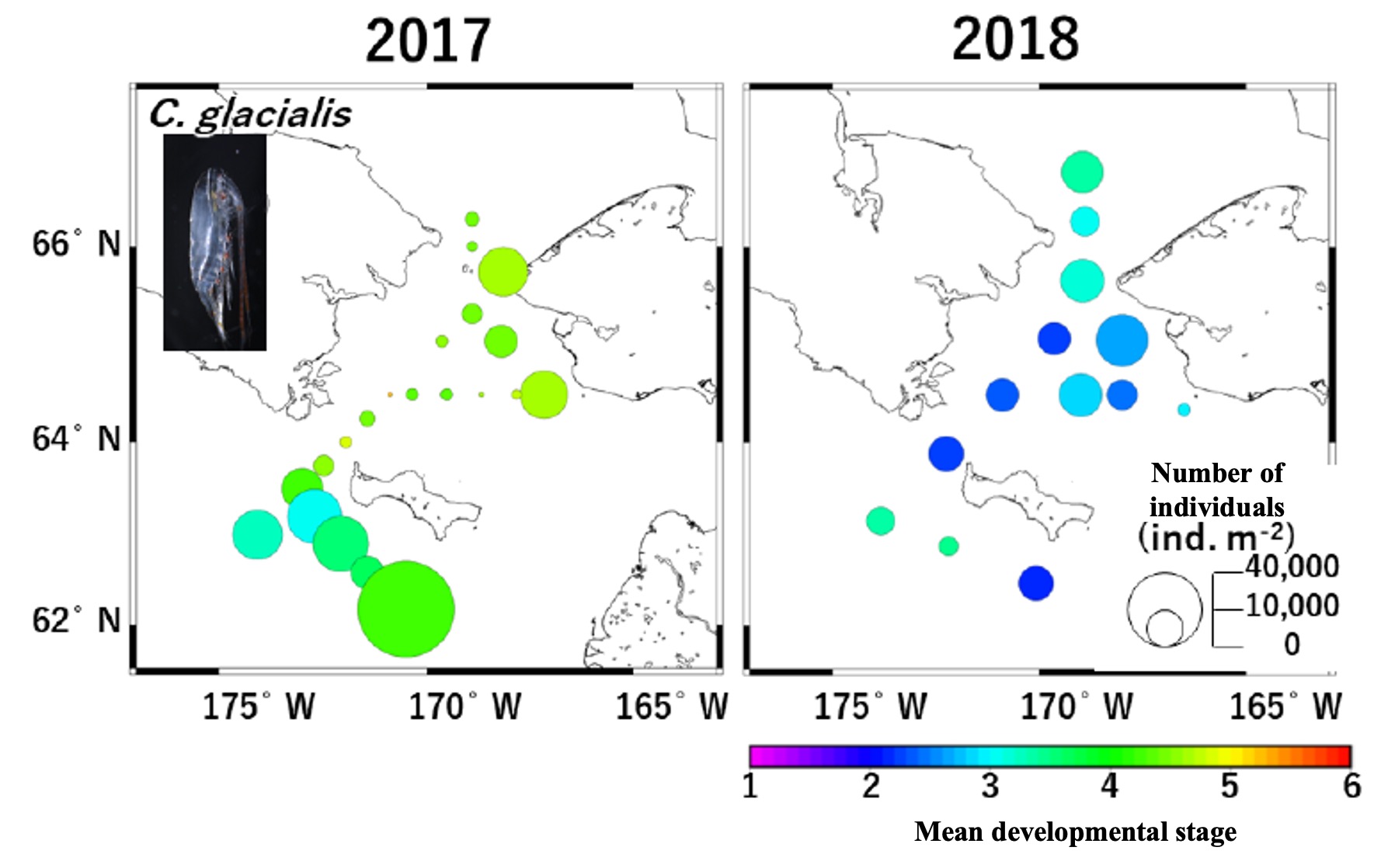
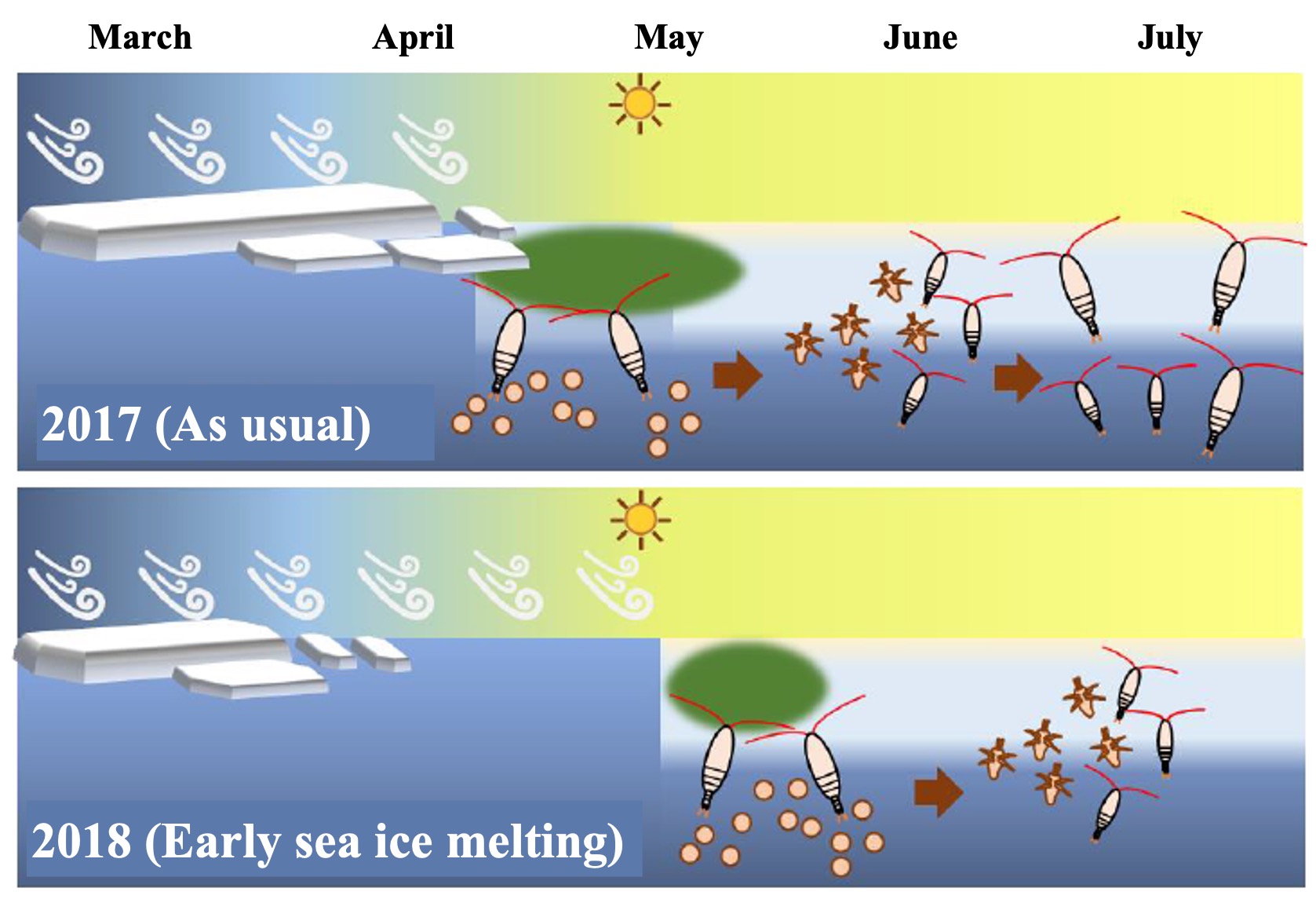
    •  Comparing the population structure of large copepods (Calanus glacialis) between 2017 and 2018, we found that the population was larger and the mean developmental stage was lower in 2018 (Figure 1). This implies that there were more young individuals and that the spawning season for this species was later in 2018. Satellite and mooring system observations indicate that the sea ice melted about a month earlier in 2018 than in usual years, resulting in a later phytoplankton bloom. Since these large copepods spawn while feeding, it is likely that the late bloom delayed the spawning season for this species (Figure 2). 

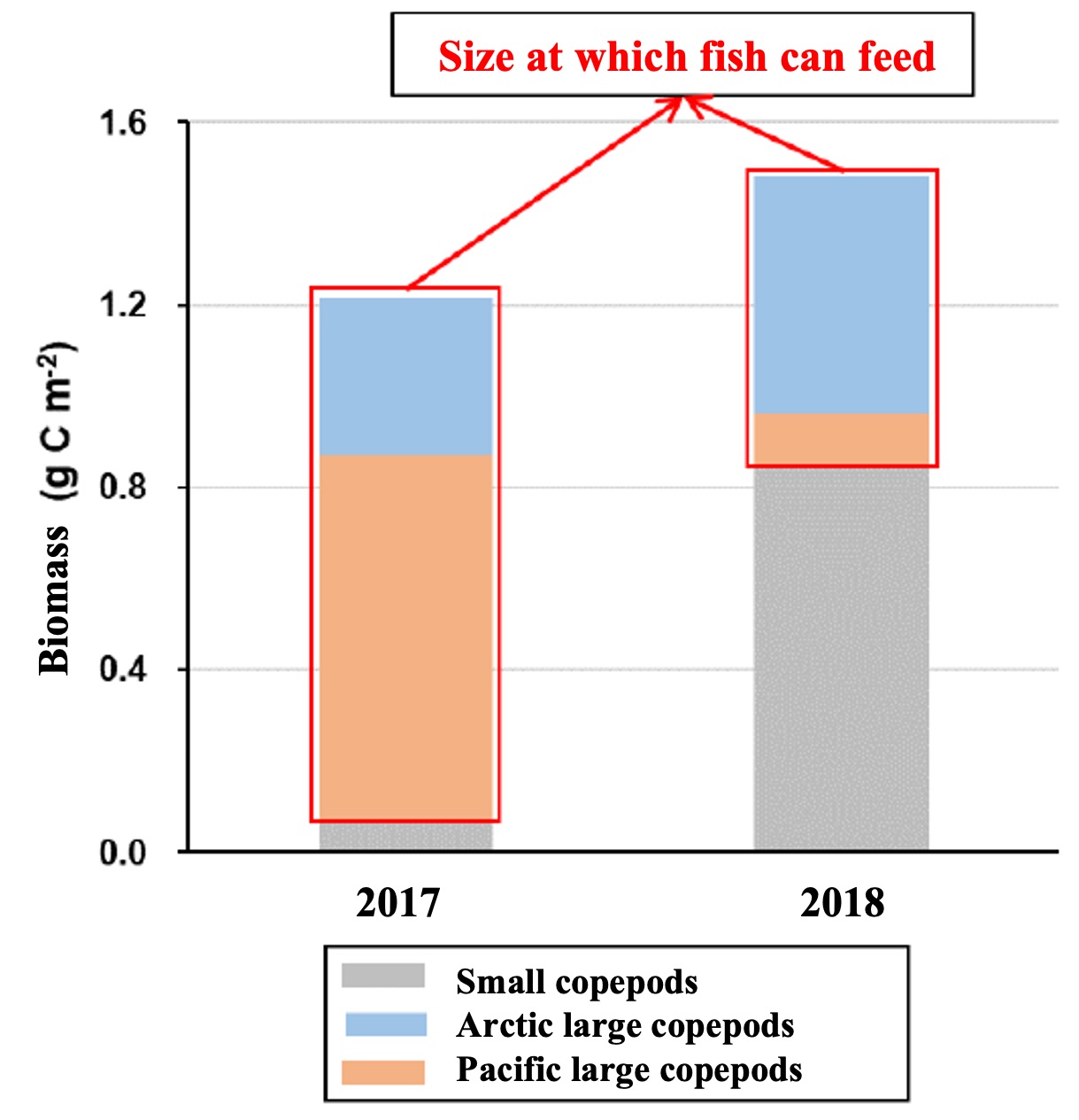
       Comparing the biomass of copepods in 2017 and 2018, we found that in 2017 there were more large copepods and in 2018 there were more small copepods (Figure 3). Considering the aspect of food for high-order predators, small copepods are considered less nutritious because they do not accumulate oil in their bodies and are less likely to be eaten due to their smaller size. In other words, in 2018, the number of large copepods, which are good food for fishes, decreased and instead there were more small copepods, which may have worsened the feeding environment for higher-order predators. 

       Thus, it is clear that the timing of the phytoplankton bloom changed, beginning with changes in the timing of sea ice melting, and that the effects of these changes extended to higher predators via copepods. 

    • Fig. 3


      Figure 1. Population size and mean developmental stage of the large copepod C. glacialis. The size of the circle indicates the number of populations, and the color indicates the mean developmental stage. 


    • Fig. 4

      Figure 2. Schematic illustration of sea ice melt, phytoplankton blooms, and copepod spawning and growth. 

    • Fig. 5

      Figure 3. Annual comparison of copepod biomass. Colors indicate size and species of copepods. Red boxes indicate the biomass of copepods large enough to be fed by fish. 
    •  This study has clarified the process by which changes in the timing of sea ice melting affect marine ecosystems. However, there is also concern about the effects of global warming, freshwater conversion, low trophic levels, and acidification on the ocean surface layer and their impacts on marine ecosystems. Climate change such as global warming is occurring not only in the polar regions but also in various other ocean regions. It is hoped that a better understanding of the impact of climate change on marine ecosystems will lead to the sustainable use of marine resources. 

    • ・Paper title

      Effects of early sea-ice reduction on zooplankton and copepod population structure in the northern Bering Sea during the summers of 2017 and 2018

      ・Author

      KIMURA Humihiko1MATSUNO Kohei2,3ABE Yoshiyuki4, YAMAGUCHI Atsushi2,3

      (1Graduate School of Fisheries Sciences, Hokkaido University, 2Faculty School of Fisheries Sciences, Hokkaido University, 3Arctic Research Center, Hokkaido University, 4Research Development Section, Office for Enhancing Institutional Capacity, Hokkaido University)

      ・Journal

      Frontier in Marine Science (Journal of Oceanography)

      ・DOI 

      10.3389/fmars.2022.808910

      ・Date of Publication

      Tuesday, February 22, 2022 (online publication)

    • Marine Biology Research Introduction The Arctic Ocean