單元大綱

  • IMAI Keiri, OGUMA Kenji, and SAWADA Kouki, Oshoro-maru Marine Science Department, School of Fisheries Sciences, Hokkaido University

  • Smith-McIntyre Bottom Sampler (commonly known as “smikin”) is a kind of grab-type mud collector that is widely used to collect organisms (benthic organisms) such as shellfish, polychaetes, starfish, sea urchins, and other echinoderms that live mainly on the seafloor surface and in the sediment. Grab-type mud collectors are used to grab sediments like a "crane game" by lowering the bucket, which is open on both sides, to the desired location.

    The standard size Smith-McIntyre Bottom Sampler on the market collects surface sediments from the seafloor surface to a depth of about 20 cm. Since the entire sediment, which is the habitat of benthic organisms, is sampled, there is little damage to the biological samples.

    Because of its small size and light weight, this mud sampler can be used on small vessels with small observation facilities and few workers, and is used in relatively shallow waters, mainly in coastal areas. Another reason for their widespread use is their ease of handling.

    In this course, the Smith-McIntyre Bottom Sampler will be explained in detail.


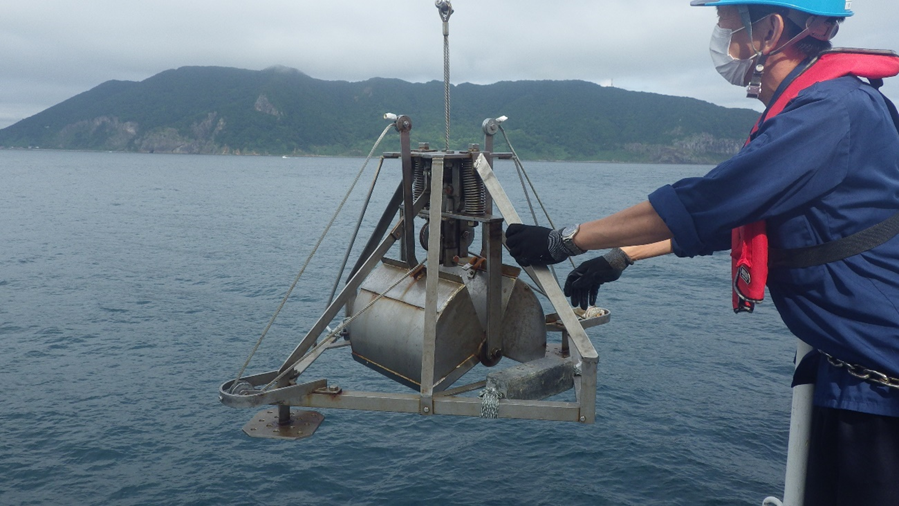
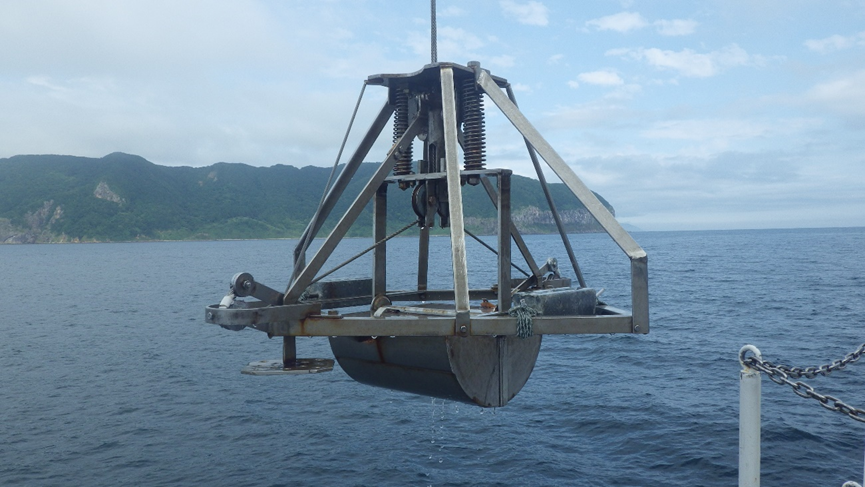
    • Fig. 1 Smith-McIntyre Bottom-sampler (top: before sampling, bucket is open; bottom: after sampling, bucket is closed)

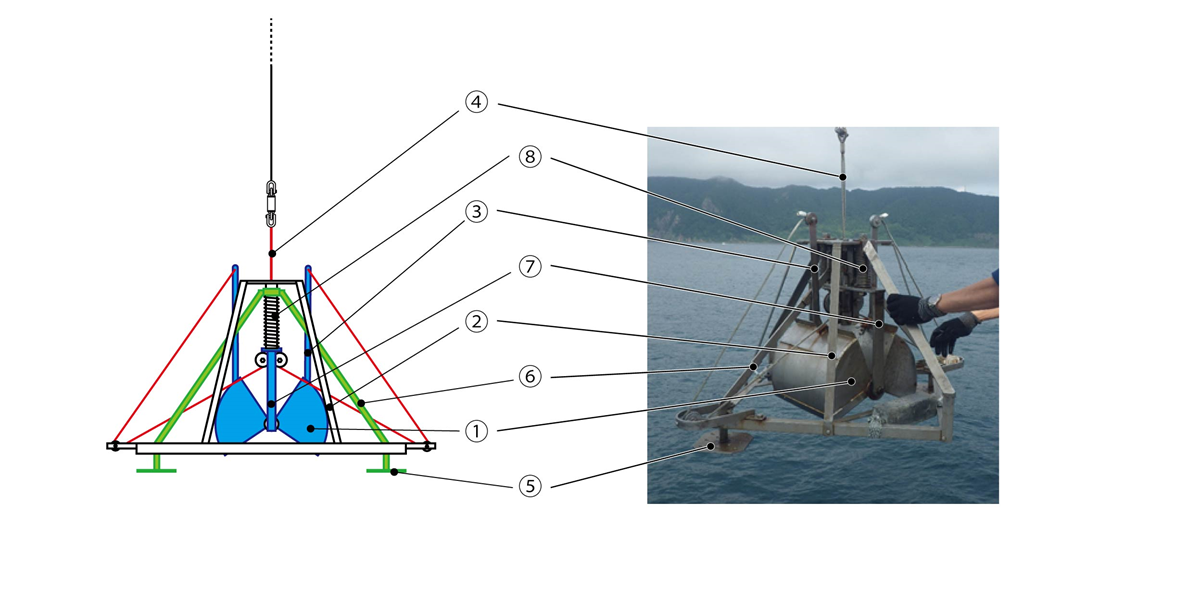
    • The names of the various parts of the mud sampler are shown in Fig. 2-① through ⑧. The ①grab bucket, which grabs the sediment, is housed in a ②metal support frame. The semi-cylindrical bucket is divided into two parts (open) at the center, and can be opened and closed by moving the ③bucket arm welded to the outside. A wire rope (④closing wire) is connected to the end of the bucket arm to lift up the mud collector. When the winch wire is wound up after landing on the bottom, the closing wire connected to the winch wire pulls the bucket arm outward, closing the bucket.

      The two ⑤bottom landing plates and ⑥bottom landing plate arms protruding below the support frame serve as the trigger for mud collection. When the trigger operates, the ⑦bucket support frame is pushed down by the force of the ⑧spring, and the bucket is pressed against the seabed. The operation of each part is explained in detail in the next chapter.


    • Fig2 Names of parts of the Smith-McIntyre Bottom Sampler

      grab bucket

      support frame

      bucket arm

      closing wire

      bottom landing plates

      bottom landing plate arm

      bucket support frame

      spring


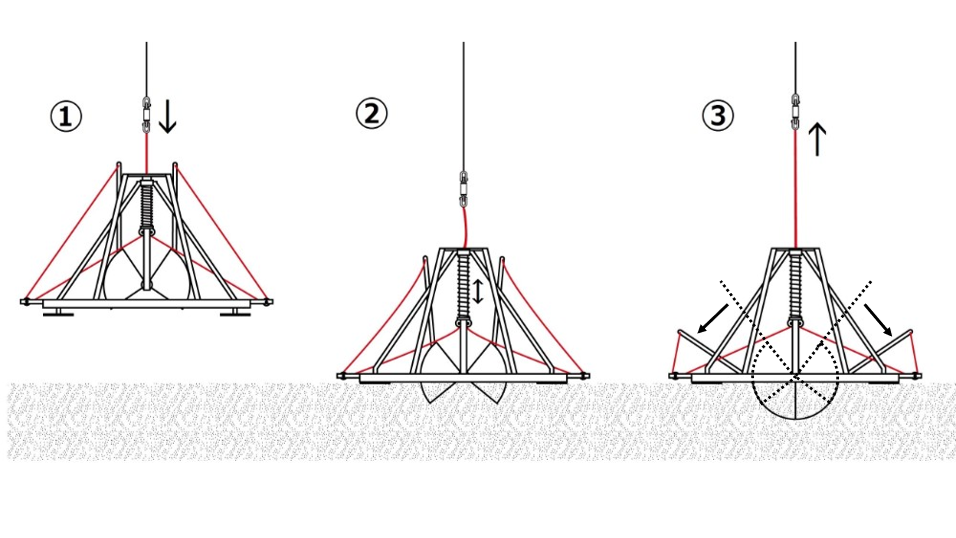
    • The operation of the Smith-McIntyre Bottom Sampler during mud sampling is shown in Fig. 3. First, the mud collector is lowered towards the seabed with the bucket open (Fig. 3-①). When the mud collector eventually reaches the seabed, the trigger operates and the open-mouthed bucket is inserted into the seabed surface by the restoring force of the released spring and its own weight (Fig. 3-②). When the wire is wound up, the bucket closes and the sediment is collected (Fig. 3-③).

      Details of the “insert bucket into seabed” and “close bucket” mechanisms presented here are shown in 2)-1 and 2)-2 respectively.


    • Fig. 3 Operation during mud sampling


    • 2)-1 Mechanism for inserting the bucket into the seabed

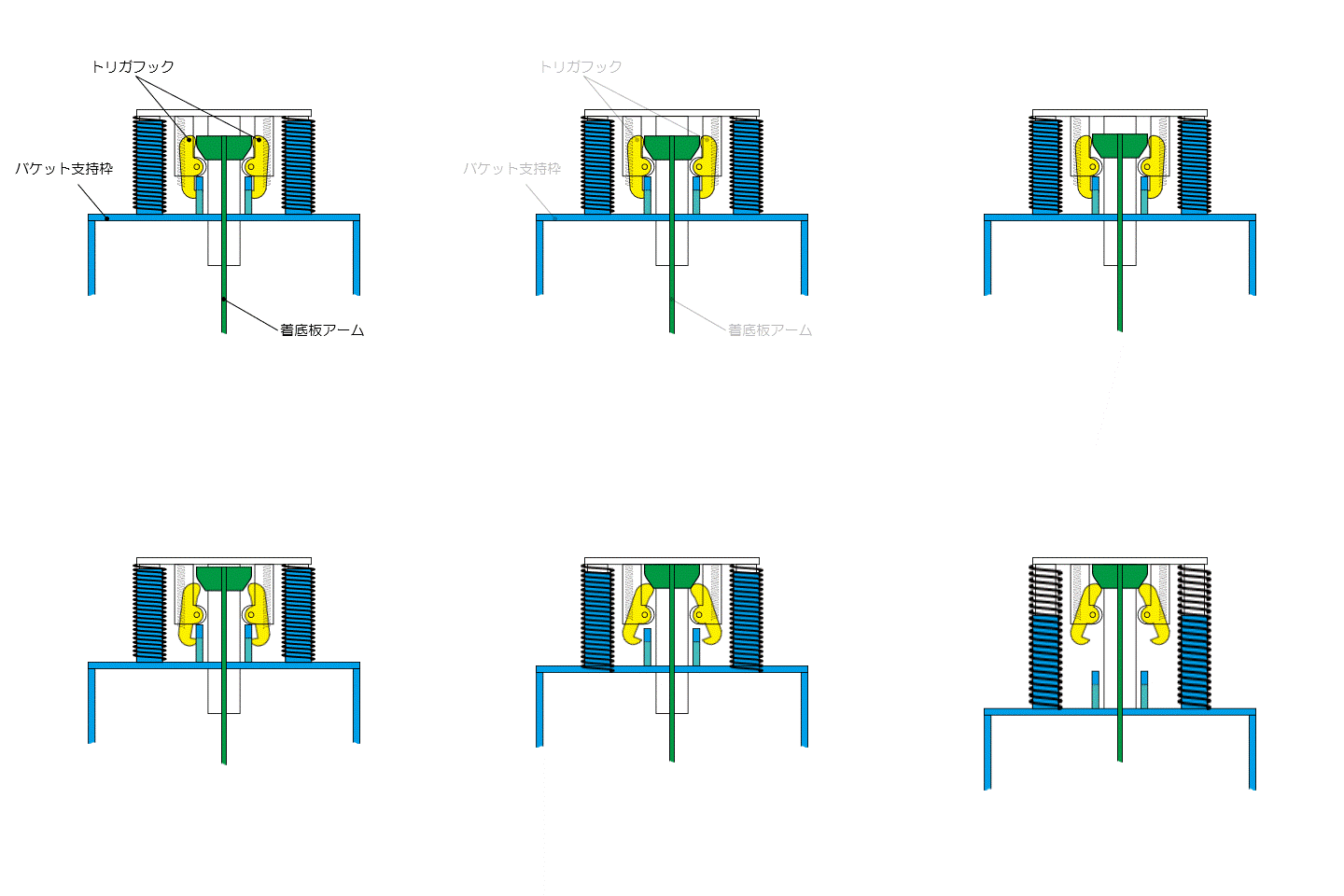
      The Smith-McIntyre Bottom-sampler uses the weight of the bucket and the restoring force of the spring shown in Fig. 2-⑧ to insert the bucket into the seabed. Figure 3- shows the spring restoring itself. The restoration is shown in detail in Fig. 4. When the landing plate reaches the seabed, the landing plate arm is pushed up and the trigger hook securing the bucket support frame is released. This releases the contracted spring and the bucket is pushed down and inserted into the seabed.


    • Fig. 4 Actuation mechanism of the landing plate trigger


    • 2)-2 Mechanism for closing the bucket

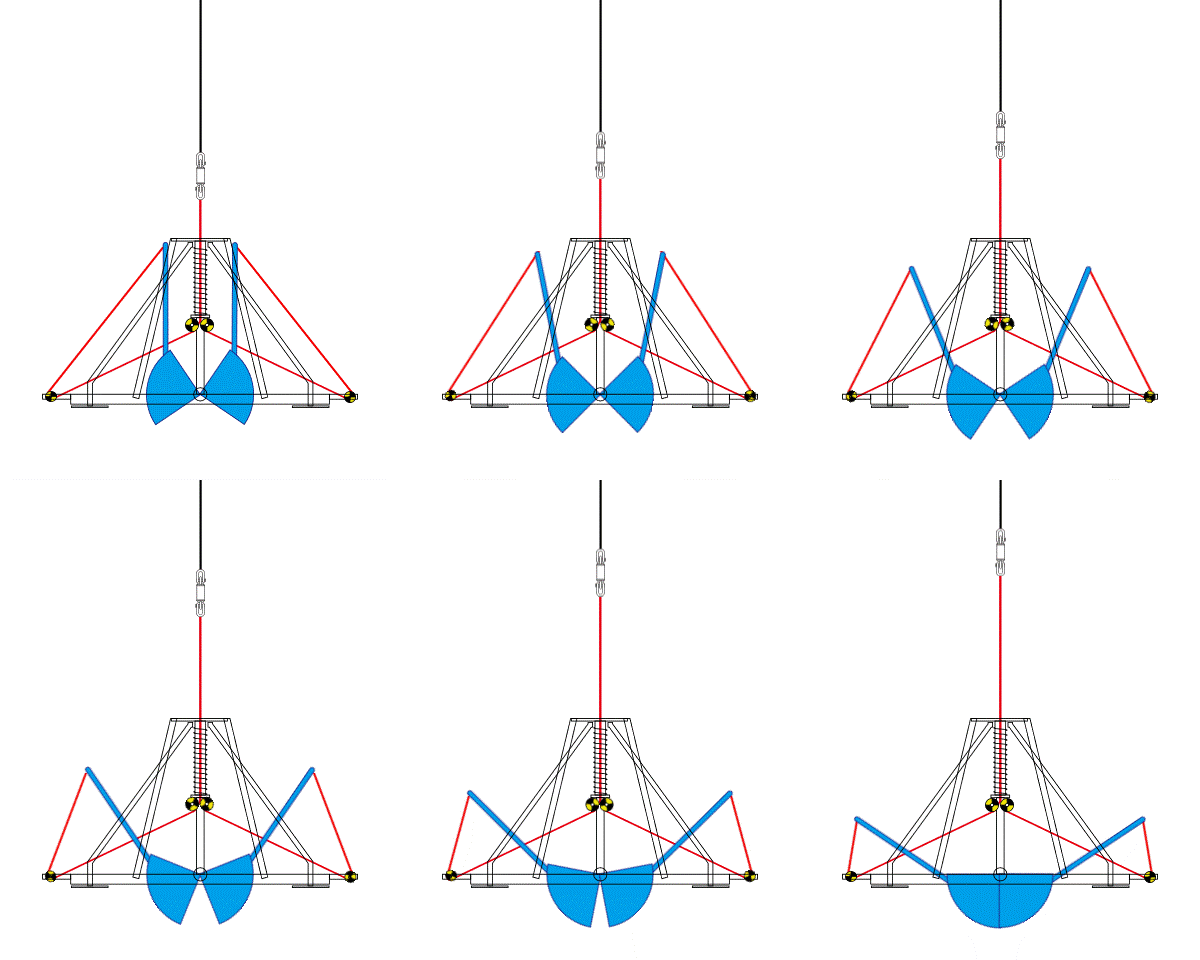
      Sediment is collected by closing a bucket inserted into the seabed. The closing of the bucket is shown in Figure 5. When the winch wire is wound up after landing on the seabed, the tip of the bucket arm spreads outwards, pulled by the closing wire. The bucket in conjunction with the bucket arm closes by the principle of leverage and collects the sediment as it gouges the seabed. When the bucket is closed, the mud sampler is lifted up by a closing wire. It is then taken off the bottom and transported on board.


    • Fig. 5 Mechanism for closing the bucket


    • To obtain samples efficiently, it is necessary to have a good understanding of how to prepare the mud sampling equipment and how to process the collected samples. Care must be taken when working on board as there is a risk of the mud collector shaking due to ship motion and wind. This section describes mud sampling operations using a Smith-McIntyre mud collector, following the workflow in the order of (1) setting up the collector, (2) inputting operations, (3) landing on the bottom, (4) lifting operations, (5) sample handling and (6) recording observations, respectively.


    • 3)-1 Setting up the mud collector

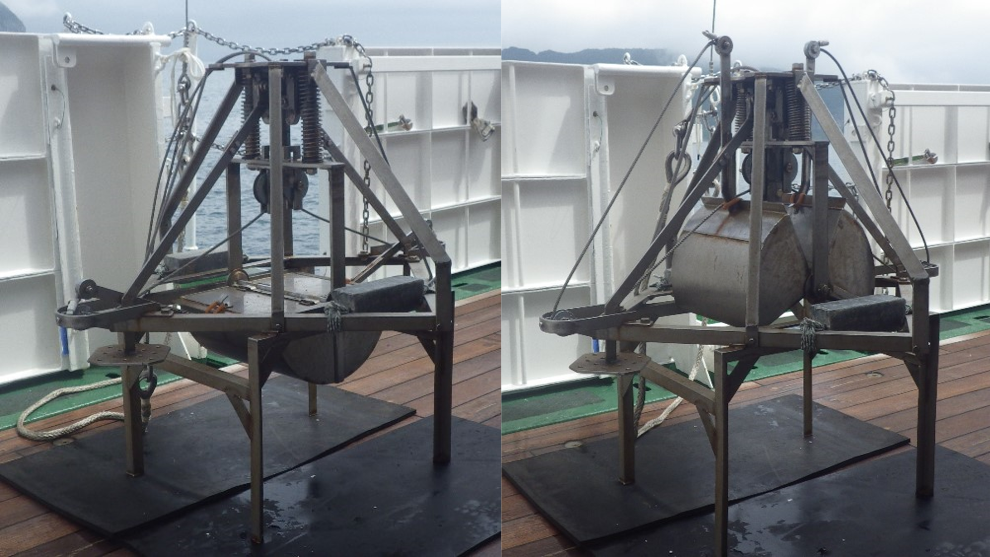
      Set-up of the mud collector is carried out before the sampler is placed in the water. Set-up means fixing the bucket in the open position (set on the trigger) and connecting it to the observation winch wire. The photographs in Fig. 6 show the conditions before and after set-up respectively.


      The set-up procedure is described in detail in the Appendix “Set-up procedure for mud collectors”.


    • Fig. 6 Before (left) and after (right) setting of the mud collector


    • 3)-2 Inputting operations

      Once the set-up is completed, the observation winch is operated and the mud collector is put into the sea. Touching moving parts such as the landing plate or landing plate arm during the operation may cause the trigger to malfunction. Therefore, work should be carried out without touching any part other than the support frame and without allowing it to come into contact with the vessel’s hull.


    • 3)-3 Landing on the bottom

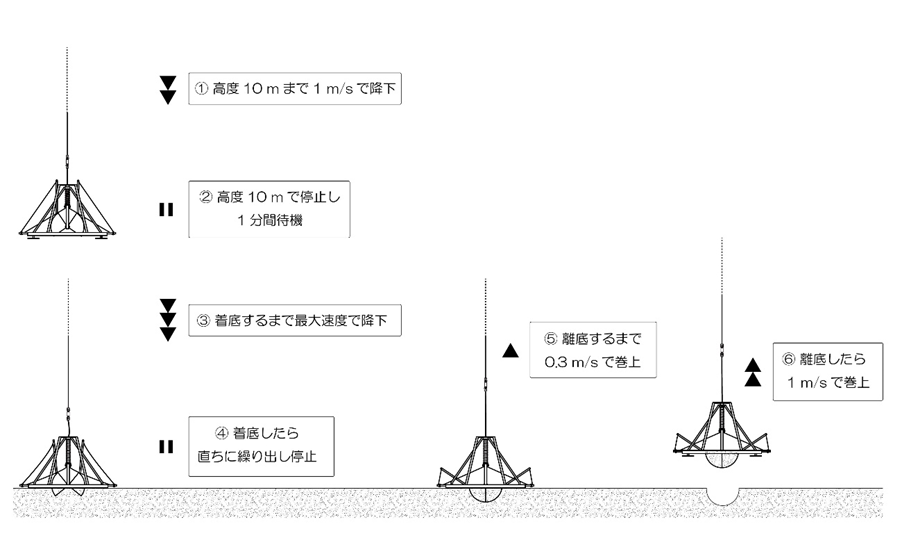
      Once the mud collector has been placed in the sea, the winch is unloaded and the mud collector is lowered towards the seabed. An example of winch operation (winch operation) when lowering the mud collector to the bottom is shown in Fig. 6. First, the wire is unrolled at a speed of 1 m/sec while checking the depth of the water and the length of the unrolled wire (Fig. 6-①). When the length of the wire reaches a depth of -10 m, stop unrolling and wait until the wire is pointing straight down (Fig. 6-). If the wire is unrolled while it is tilted, the mud collector may land on the bottom at an angle and the trigger may not operate. After waiting, resume unloading at the maximum speed of the winch to allow the mud collector to fall freely (Fig. 6-). As soon as the mud collector has reached the bottom, immediately stop the wire ejection (Fig. 6-④). The mud collector is considered to have reached the bottom when the tension on the wire decreases. As soon as the mud collector has reached the bottom, the trigger of the mud collector finishes operating and the wire starts winding at low speed (0.3 m/s) without a pause (Fig. 6-⑤). As the wire is wound up, the tension gradually increases, and when a constant tension is observed, the mud collector can be confirmed to have left the bottom. The hoisting speed is then increased and the mud collector is quickly recovered on board (Fig. 6-).


    • Fig. 6 Winch operation on landing


    • 3)-4 Lifting operations

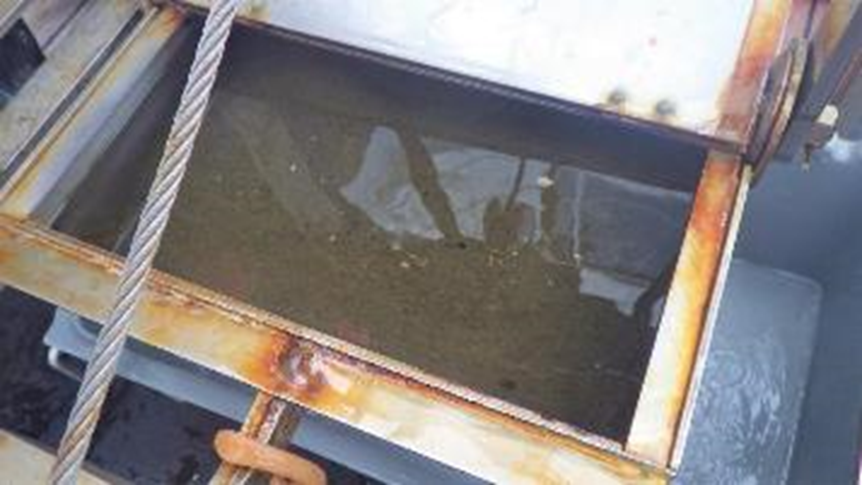
      Take care not to allow the mud collector to come into contact with the hull or touch the bucket arm when lifting it from the sea to prevent the bucket from opening and spilling the sample. The lifted mud sampler is then returned to its original position on a dedicated platform. The top lid of the closed grab bucket can be opened to reveal the sample collected (Fig. 7).


    • Fig. 7 Collected sediments and immediate seawater


    • 3)-5 Sample handling

      The collected samples are processed according to the purpose of the research.

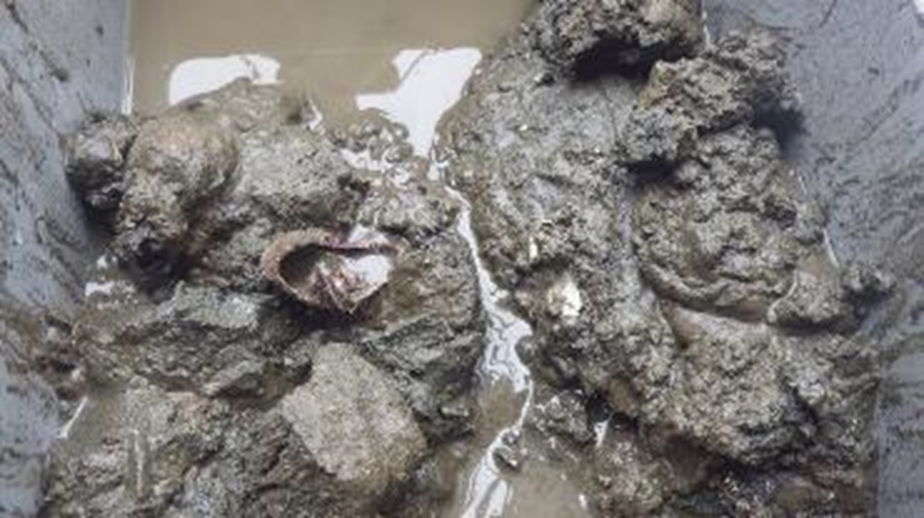
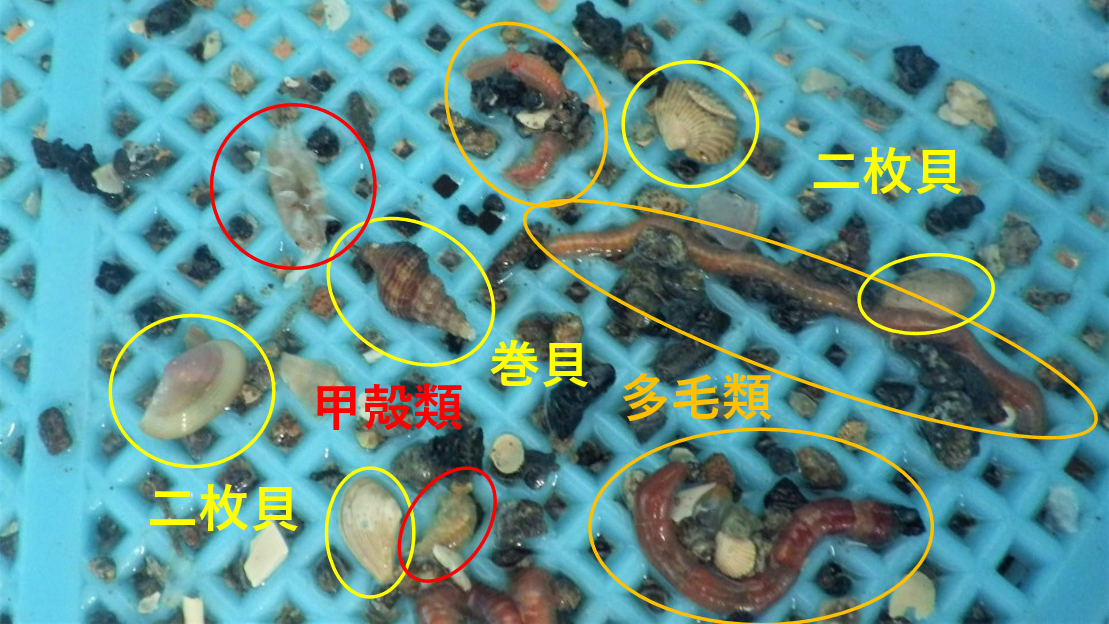
      If the organisms in the sediment are to be surveyed, the sample (Fig. 8) is removed from the bucket onto a tray or similar and processed through a sieve to select the biological samples from the sediment. The sediment is then poured over with seawater to wash away the sand and mud, and the organisms remaining on the sieve (Fig. 9) are picked up. The size of the sieve is selected according to the size of the biological sample to be collected or the rock particles contained in the collected sediment. In other words, select a sieve with a mesh size that is smaller than the desired sample, so that only the unwanted mud or sand flows out.


    • Fig. 8 Sediment samples collected in trays


    • Fig. 9 Biological samples remaining on the sieve

      二枚貝: bivalves 甲殻類: crustaceans 巻貝: conchs 多毛類: polychaetes


    • Sediments are formed by the accumulation over time of mineral particles of terrestrial origin and materials resulting from bioproduction processes, which can be analyzed at different depths to estimate the environment at different ages. When sediment samples are used for this purpose, they are treated differently to those used for benthic studies. First, the top lid of the bucket is opened and seawater is removed using a silicon tube or syringe to prevent sediment surface run-off. This seawater can be analyzed as a direct seawater sample. The sediment surface layer has a high water content and is very soft, so it is scooped out with a spoon or similar. A pipe is then inserted to cut through the sediment into columns, which are then pushed out of the pipe to distribute the sample into layers of arbitrary thickness and to age the sample.


    • 3)-6 Recording of observations

      Information on how the samples were collected is the most fundamental data for surveys and research. Therefore, the “date and time” and “location” (expressed as latitude, longitude, and depth) of the mud sampling, as well as the “properties of the obtained samples” should be recorded. In addition, different symbols and numbers should be determined for each mud sampling operation, and these should be written in both the field notebook and on the sample’s label, so that it is easy to look back to see how each sample was obtained.

      By recording not only the sample itself but also supplementary information such as the sea conditions at the time of the work and the specifications of the mud collector used, it can be used as material when considering the next sampling point and sampling method. Many research institutes prepare special sheets (field notebooks) to systematically keep records.


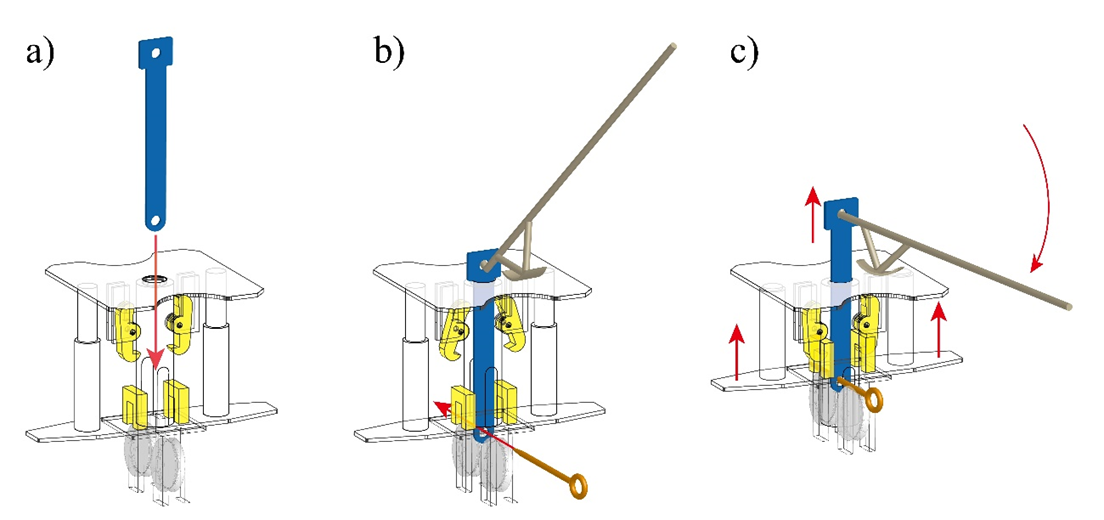
    • The setup of the mud collector before placing it in the water requires a two-step operation: retracting the spring and setting it on the trigger, and then opening the bucket and setting it on the trigger. The procedure is described in detail below.

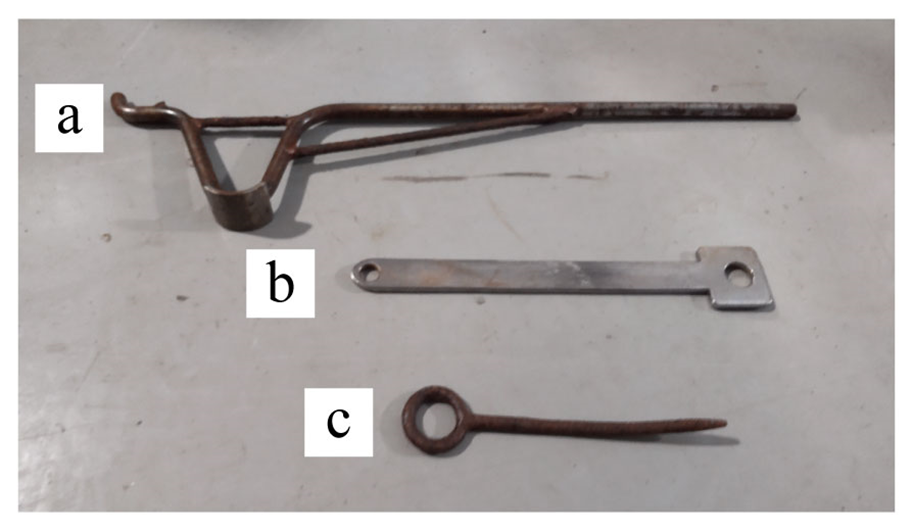
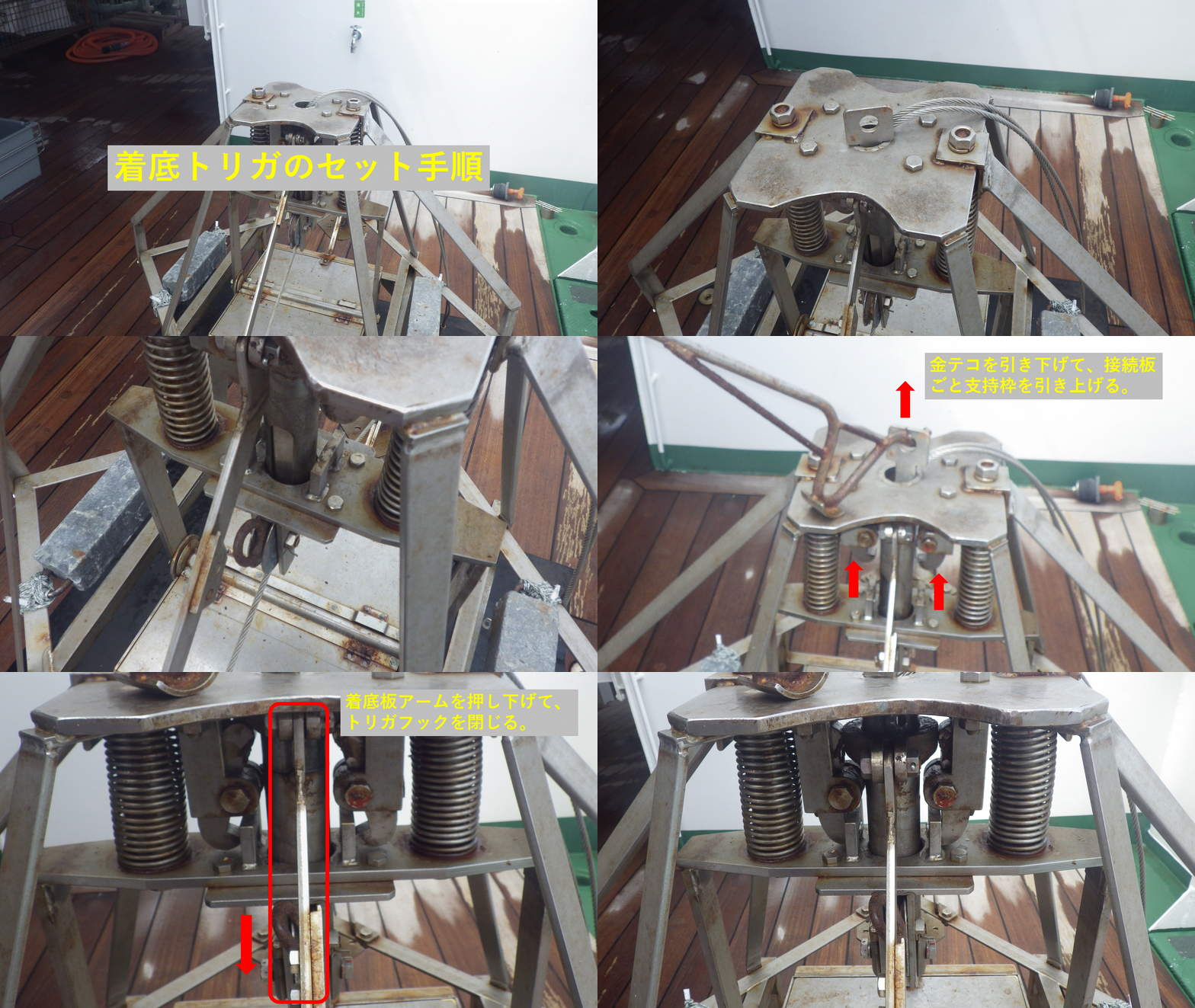
      In the beginning, the bucket is lifted and the spring is retracted and set on the trigger as shown in Fig. 10. Since the bucket is subjected to strong spring repulsive force in this process, use the special tool shown in Fig. 11 for this operation. First, insert the connecting plate into the hole in the center of the upper surface of the support frame (Fig. 10-a). Next, insert the tip of the metal lever through the upper hole in the connecting plate and the support pin through the lower hole (Fig. 10-b). By inserting the support pin, the connecting plate and the bucket support frame are connected, so when the handle of the lever is pushed down and the connecting plate is pulled up, the bucket support frame is also pulled up at the same time. Finally, close the trigger hook and secure the bucket support frame (Fig. 10-c). The trigger hook can be opened and closed by moving the bottom plate arm as shown in Fig. 4. The sequence of operations is shown in a series of photographs in Fig. 12.


    • Fig. 10 Procedure for setting to trigger


    • Fig. 11 Special tool for setup

      a. Metal lever b. Connecting plate c. Support pin


    • Fig. 12 Procedure for setting to trigger (continuous photo)


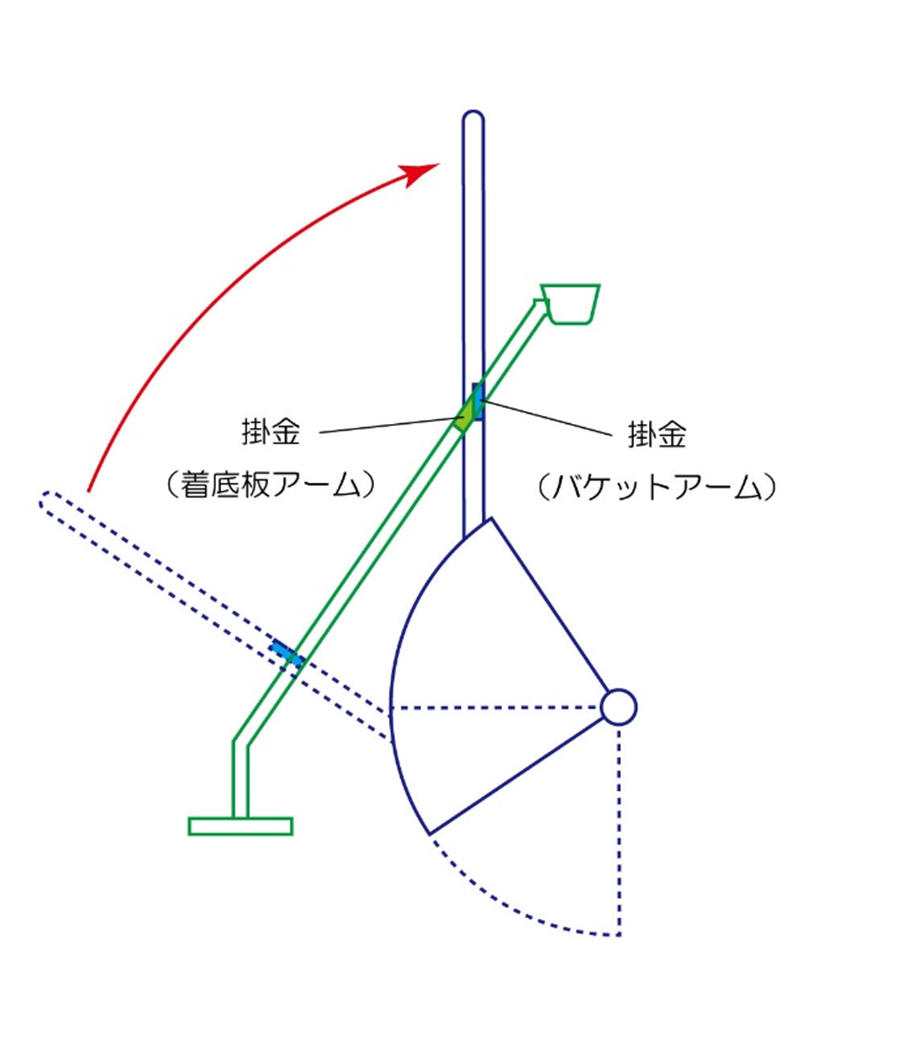
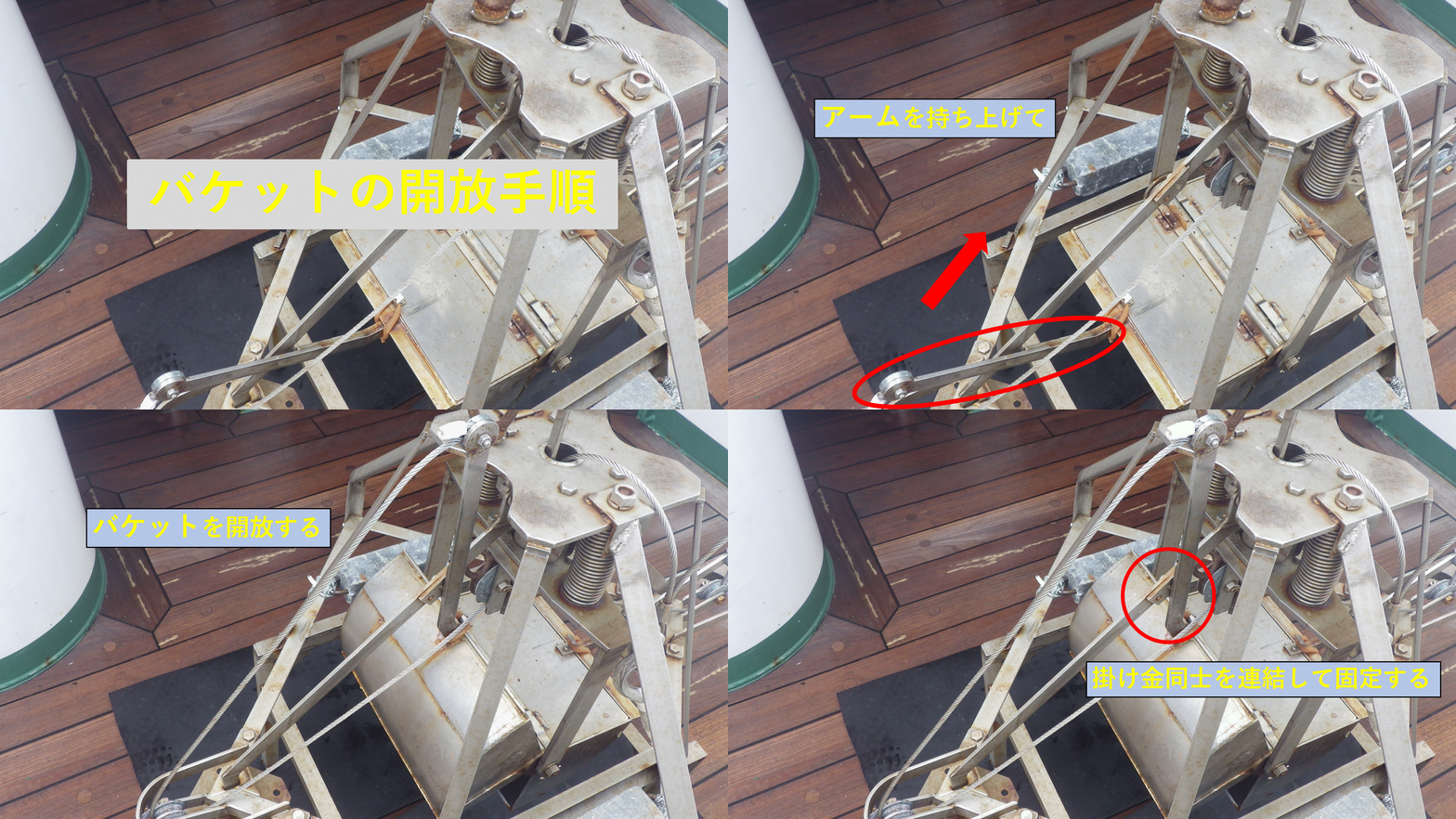
    • Next, set the bucket in the open position on the trigger. Pull up the bucket arm as shown in Fig. 13 to connect the hook of the bucket arm to the hook of the bottoming plate arm. When the mud collector reaches the bottom, the connection between the two is disconnected and the bucket is unfastened. Figure 14 shows a series of photographs of this operation.

      Do not touch the set-up mud collector or put your hand in the opening of the bucket as a malfunction could cause the bucket to close unexpectedly.


    • Fig. 13 Bucket opening procedure

      掛金: hook 着底板アーム: bottoming plate arm バケットアーム: bucket arm


    • Fig. 14 Bucket opening procedure (continuous photo)


  • Trainig Ship